

6-Day Turkmenistan Highlights
Darvaza, ancient Merv and the Dinosaur Plateau of Köýtendag in six days, with two domestic flights to save time on the road.

Hikes in the Ýangykala canyon, around the mountain village of Nohur and on the Köýtendag ridge with its dinosaur footprints, plus a swim in Kow-Ata and a night at Darvaza.
Ten days for those who like to walk. We hike in the Ýangykala canyon, on the shepherds’ paths around the mountain village of Nohur and on the Köýtendag ridge with its dinosaur footprints, and still find time for Ashgabat, the warm underground lake of Kow-Ata and a night at Darvaza. Domestic flights shorten the long transfers.
Walks take 3–6 hours a day on unmarked trails; good fitness and broken-in trekking boots are needed. Best seasons: April – May and September – October. Small group of up to 12 people; the domestic flight schedule may change the order of the days.
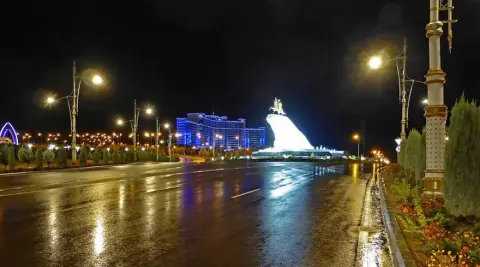
Meeting at Ashgabat airport and transfer to the hotel. In the afternoon a first look at the white-marble city: the Independence Monument, the Neutrality Monument and the Ertuğrul Gazi Mosque. In the evening your guide talks you through the route and the gear for the coming days.
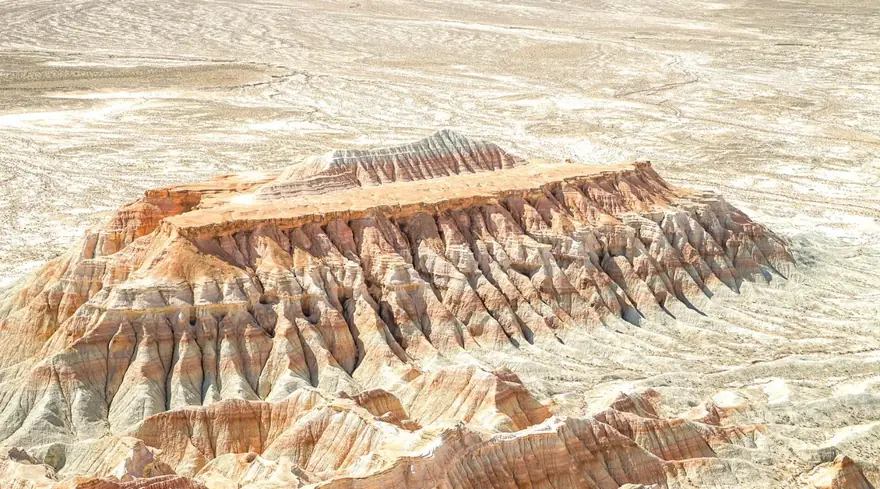
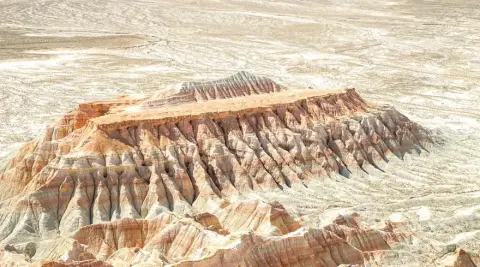
A morning flight takes us west to Balkanabat (about 1 hour), where the 4x4s are waiting. The last part of the 165 km drive north to Ýangykala is off-road. In the afternoon we hike down into the canyon between pink, white and red cliffs and climb back to the rim for sunset; dinner and the night in tents at the edge of the canyon.
A sunrise walk along the rim, when the cliffs change colour every few minutes. On the way back we visit Gozli Ata, a pilgrimage site in a desert valley with the twin-domed tomb of a revered Sufi teacher. Lunch in Balkanabat and an afternoon flight back to Ashgabat.
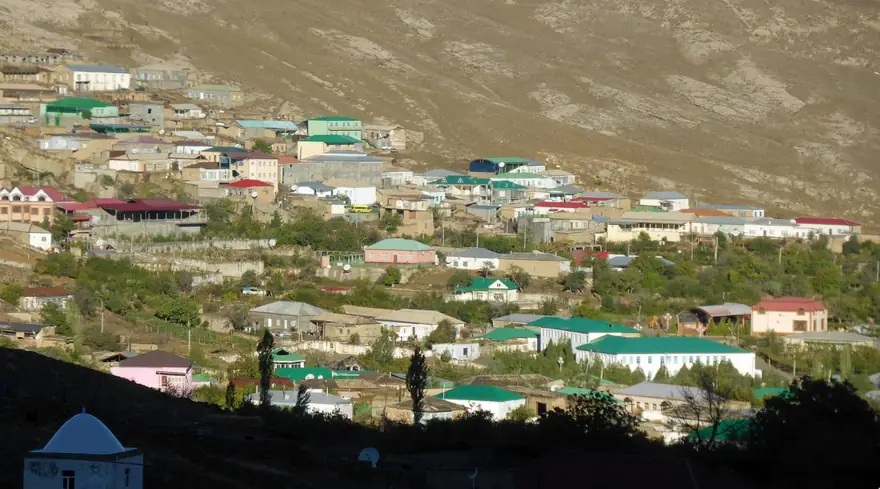
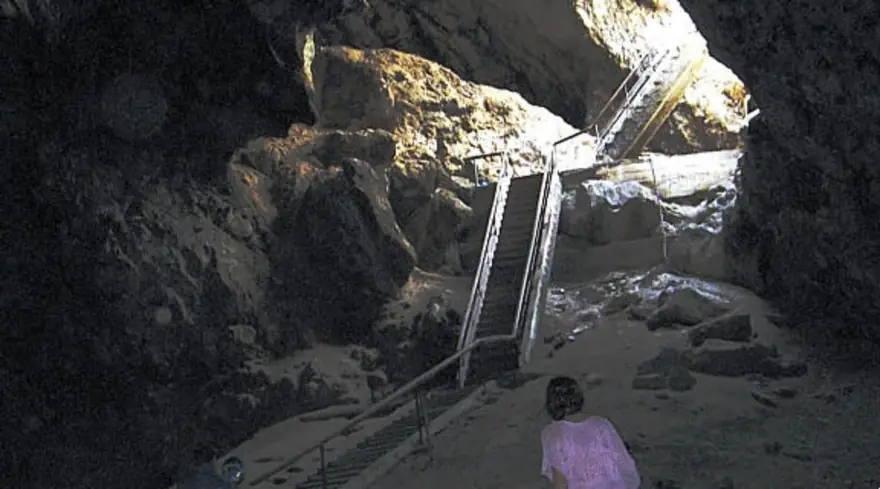
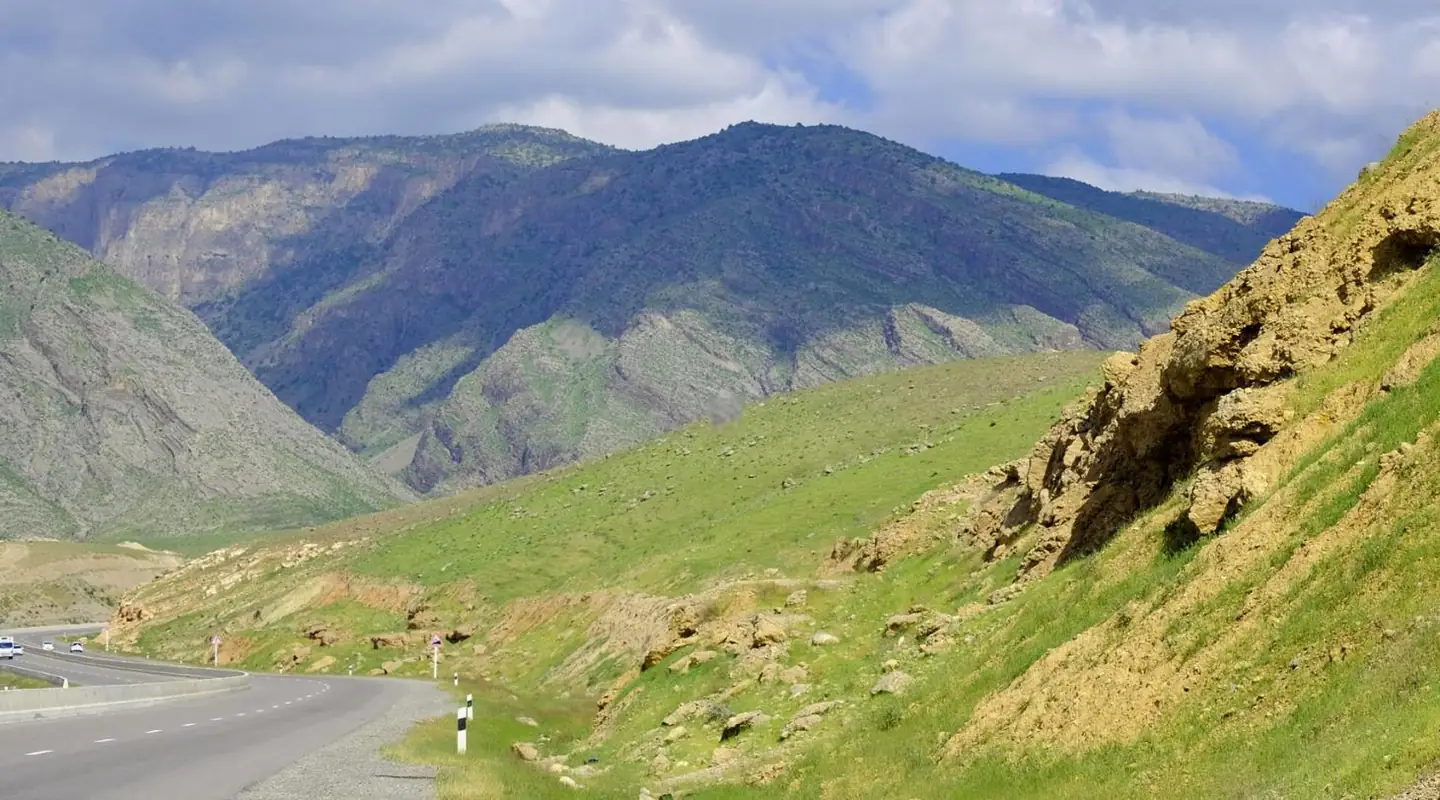
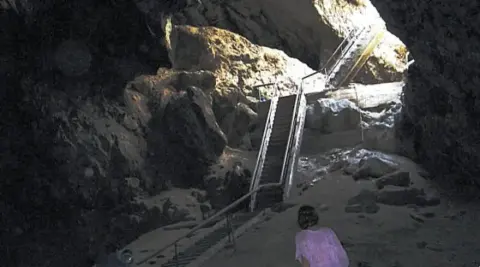
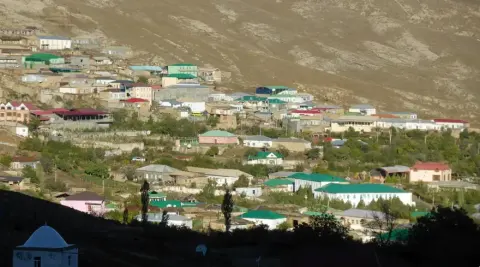
We drive west along the Köpetdag to Kow-Ata near Bahardén (about 100 km), where steps lead some 55 metres down into a cave to a warm sulphur lake — a swim at around 35 °C. Then up into the mountains to Nohur, a village known for its old customs and a cemetery with wild-goat horns on the graves. Dinner and the night with a local family.
A full day on shepherds’ paths above the village: 5–6 hours of walking over juniper slopes and through side gorges to a small waterfall, with a picnic lunch on the way. Back in Nohur, bread fresh from the tamdyr oven and an evening with the family.
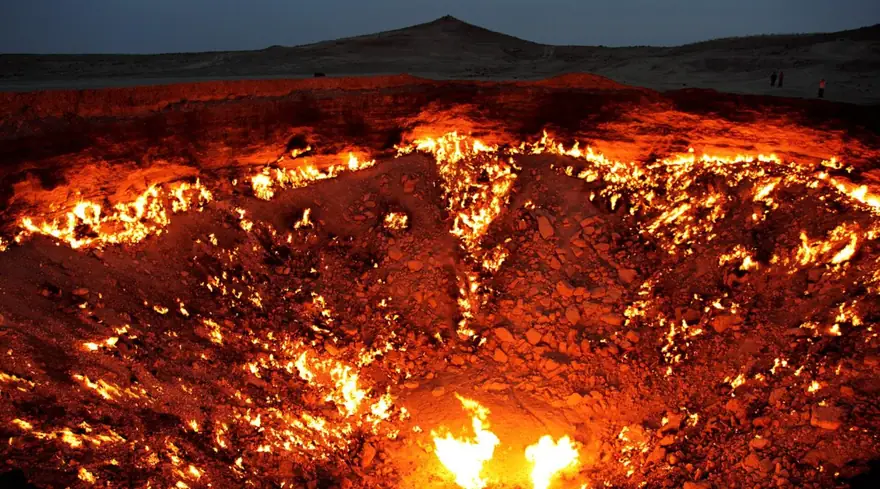
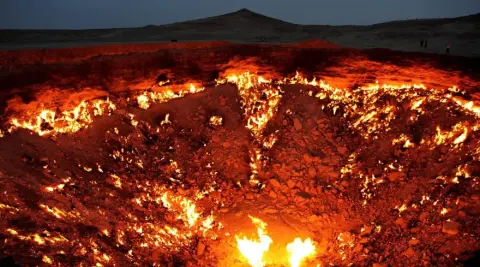
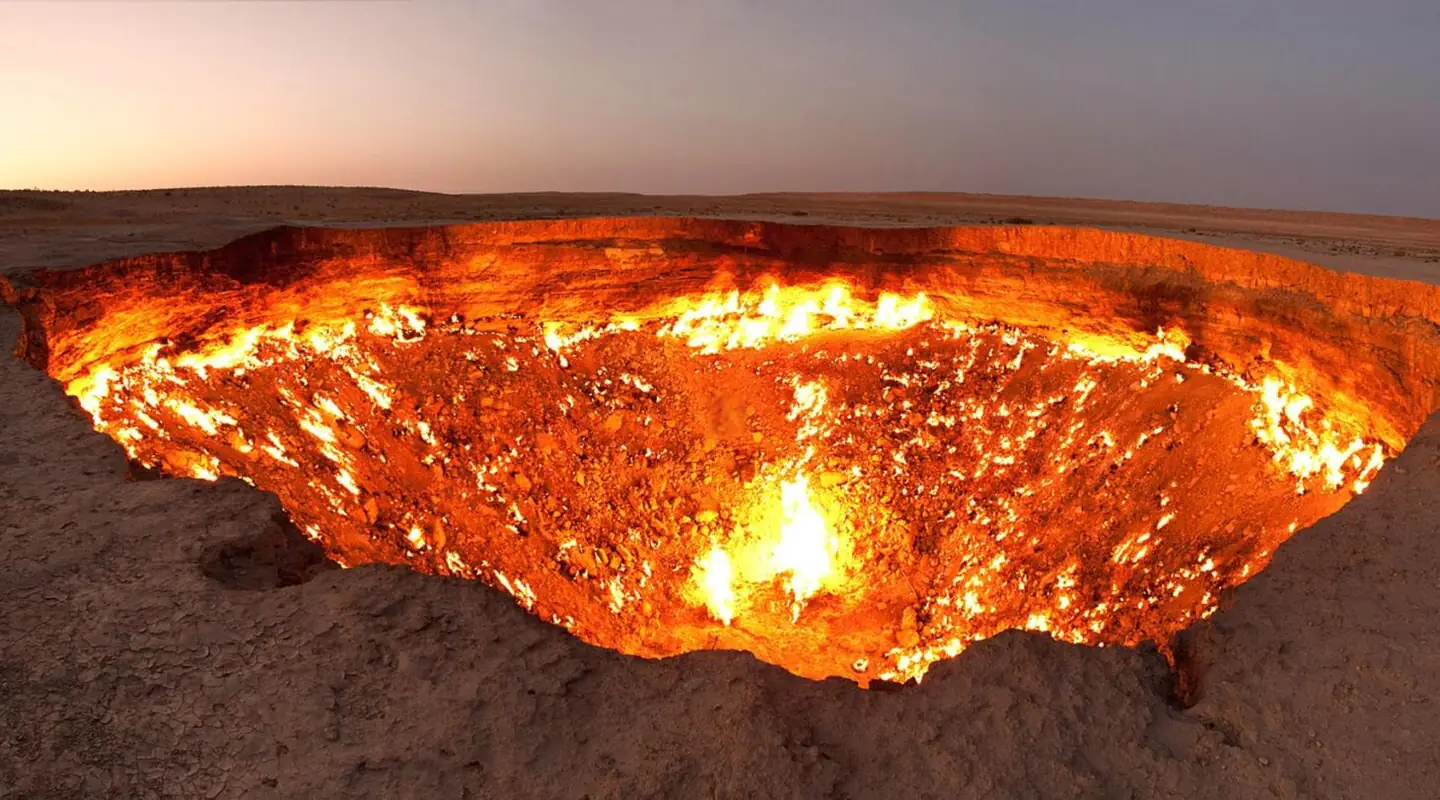
We leave the mountains in the morning and stop at Gökdepe, the 19th-century fortress where the Turkmen fought the Russian army, now marked by a large mosque. After lunch in Ashgabat the road leads north into the Karakum (about 4 hours) to the water and mud craters and the burning Darvaza crater. Dinner by the fire and a night in the yurt camp.
Sunrise at the crater, breakfast at the camp and the drive back to Ashgabat with a stop in the village of Yerbent. After lunch and some free time in the city we take an evening flight east to Türkmenabat on the Amu Darya (about 1 hour).
A 5-hour drive south-east along the Amu Darya, with a stop at the medieval shrine of Astana Baba near Kerki. In the afternoon we reach the Köýtendag foothills and walk up the Umbar-dere gorge to its waterfall (about 2 hours there and back). Dinner and the night at a village guesthouse.
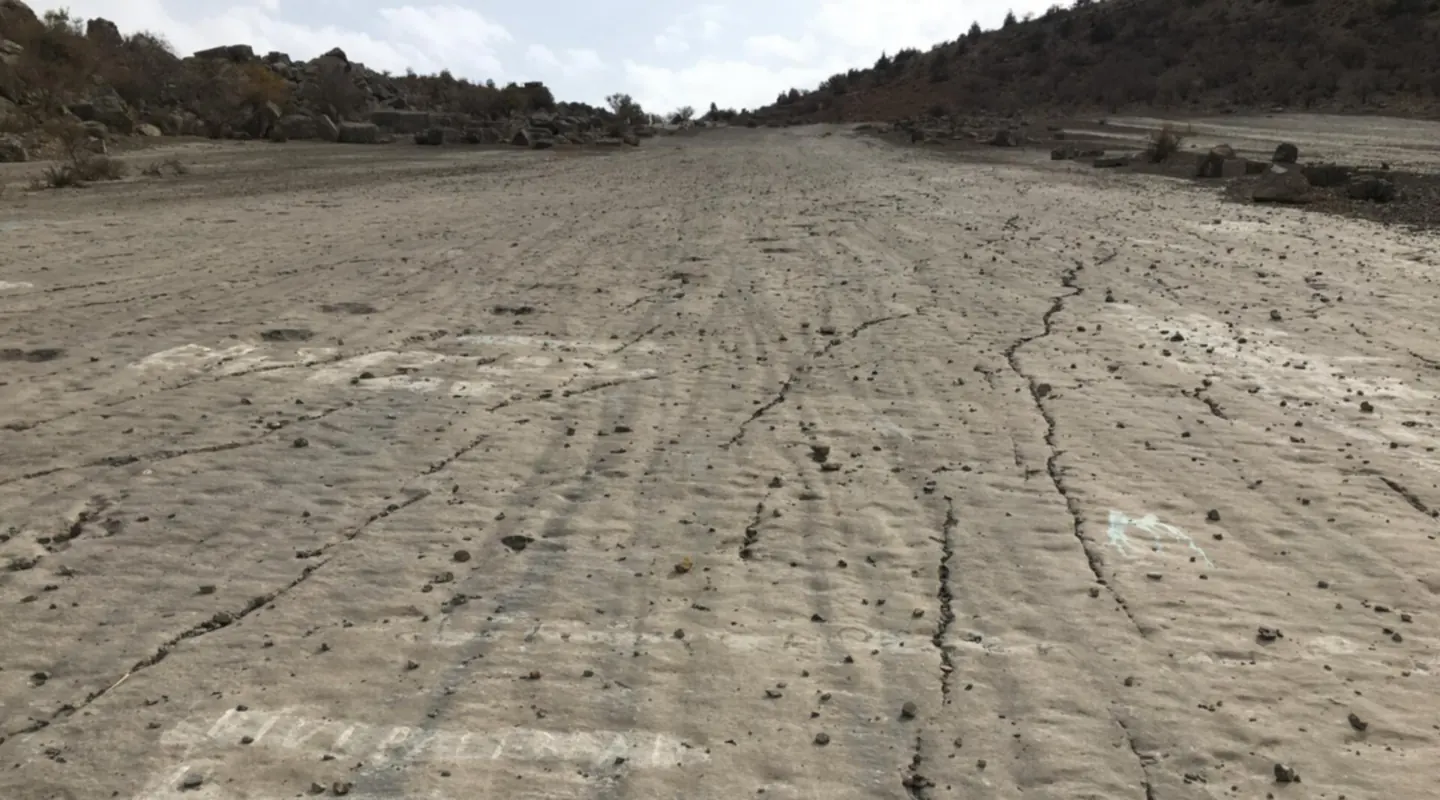
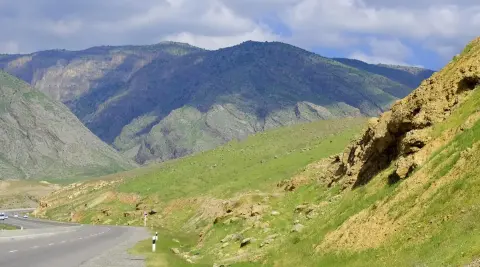
A 4x4 takes us up to the Hojapil plateau, where a sloping limestone slab keeps hundreds of dinosaur footprints from the Jurassic period. From there we hike for 4–5 hours along the ridge, with views towards Aýrybaba (3,138 m), the highest peak of Turkmenistan. Farewell dinner at the guesthouse.
An early start for the drive back to Türkmenabat (about 5 hours) and an afternoon flight to Ashgabat. Transfer to the airport for your international flight; if it leaves the next morning, we can book an extra night in Ashgabat.
Darvaza, ancient Merv and the Dinosaur Plateau of Köýtendag in six days, with two domestic flights to save time on the road.
Canyons, the crater, two UNESCO cities and the lost Margush civilisation at Gonur Depe — the whole country in eight days, with domestic flights between the regions.
The classic transit between Khiva and Bukhara: medieval Köneürgenç, a night by the burning crater, the marble capital and ancient Merv.